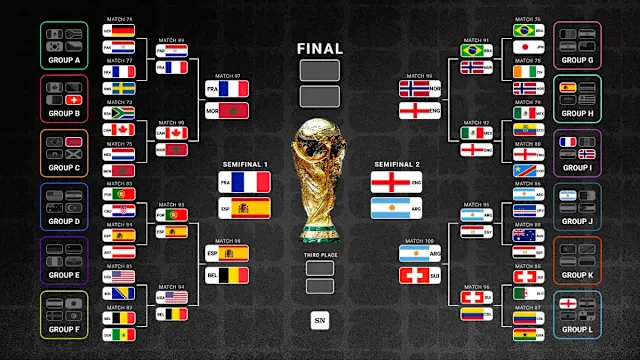
FIFA World Cup rankings have been officially finalised following the conclusion of this summer’s tournament in North America, with all 48 participating teams assigned definitive positions based on performance metrics across all stages.
A structured evaluation framework was applied by FIFA’s ranking model. Total points won in all matches was the criterion used for judging the teams, and penalty shoot-outs were treated as a draw. Goal difference and total goals scored were used as secondary performance indicators, following that. If teams were tied after all these criteria were applied, the same ranking was used, guaranteeing a fair and consistent ranking system.
Morocco came out on top among Middle East and North Africa (MENA) countries, sharing seventh place with Switzerland. They played a consistent and tactical campaign, making it to the quarter-final and facing France in the end. This placement is a testament to Morocco’s progress in international football and their recent efforts to develop their squad and gain exposure to the game at a global level.
Egypt were one of the most impressive teams to come out of the region, and in doing so they were seen as a threat to grow. The Pharaohs accomplished several historic feats in a single tournament cycle, winning their first-ever World Cup match, coming out of the group stage and taking the knockout-stage win. Structurally, from an analytical point of view, Egypt’s improvement is on the defensive side, with regard to the attacking side, they have improved in the way that they react to the pressure of the tournament.
The final result of the tournament not only reflects the score but also affects future seeding, qualification processes and the world’s perception. These rankings serve as benchmarks of performance and strategic indicators for planning at the federation level for emerging football nations of the world.